Plumbers: Use RateCards to Improve Your Monthly Sales
Boost your plumbing income with RateCards. Standardize pricing, automate bookings, and get paid faster while building a scalable, professional business.
Independent plumbers rarely lack work. Pipes burst, water heaters quit and drains back up on their own schedule, and customers call whoever can come fastest. What most plumbers lack is a system that turns that demand into consistent, well-priced income.
This guide covers how to price your services consistently, charge properly for urgent work, collect payment without chasing it, and grow without losing control.
The plumbing trade has quietly become one of the strongest freelance and small-business opportunities in the country. Homes always need maintenance. Pipes burst at the worst possible times. Water heaters fail on cold mornings. And when they do, people don't spend weeks comparing options—they reach out to someone who can solve the problem immediately.
That urgency is what makes plumbing one of the most financially powerful freelance careers available today. But demand alone doesn't guarantee profit.
To truly turn plumbing into a scalable, stable freelance business, you need more than technical skill. You need structure, consistency, and systems that help you capture the full value of your time.
That's where tools like RateCards—and modern service platforms—come in.
The Freelance Plumbing Reality: High Demand, Inconsistent Pricing
Most freelance plumbers don't struggle to find work. The calls come in. Messages stack up. Emergency requests pop up at all hours.
The real issue isn't volume—it's value.
Many independent plumbers still price jobs in ways that are:
- Based on memory instead of structure
- Different from one customer to the next
- Influenced by urgency or negotiation
- Disconnected from actual profitability
That means two identical jobs can end up with completely different prices. Over time, that inconsistency quietly eats into income.
This is the difference between staying busy and building real financial stability.
Turning Skill Into a Business: Why Structure Matters
Plumbing is already a valuable trade. But turning it into a business requires systems that remove guesswork.
The shift happens when you move from:
"I charge what feels right" to "I operate with a structured pricing system that reflects my value."
RateCards make that possible—especially when paired with tools that simplify how you interact with customers and manage your workflow.
How RateCards (and Smart Features) Strengthen Your Plumbing Business
- A Clear Menu of Services Eliminates Guesswork Instead of pricing on the fly, you create a defined menu of services—drain cleaning, leak repairs, installations, emergency services—with set costs. Both you and your customers know exactly what to expect before the job begins.
This transparency builds trust and positions you as a professional, not just a freelancer.
You Stop Underselling Your Work—and Even Earn More Through Tips When your pricing is structured, you're less likely to undervalue your expertise. On top of that, giving clients the option to add a tip for work well done creates an additional revenue stream—especially when you deliver great service.
Faster Booking with Automated Scheduling Time spent coordinating appointments is time lost.
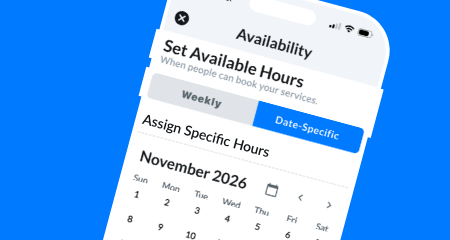
With automated booking, clients request a time from your availability—and can even set up recurring appointments for maintenance jobs. This keeps your calendar full without constant back-and-forth communication.
Direct Messaging Keeps Communication Simple Instead of juggling calls and texts, direct in-app messaging keeps everything in one place. You can respond faster, clarify job details, and maintain a professional line of communication with every client.
Capture More Revenue from Urgent and After-Hours Work Emergency plumbing is where demand spikes—and your pricing should reflect that.
With structured Rate Cards, you can define premium pricing for late-night calls, weekends, or urgent repairs. When demand goes up, your income does too. Set these rates in advance and keep them published. During a declared state of emergency, many states cap price increases on repair work (California's limit is 10% above pre-emergency prices), so don't raise prices after a disaster hits.
- Get Paid Up Front—No Chasing Invoices Sending invoices and waiting days (or weeks) to get paid slows down your cash flow.
With integrated payments, the client's card is charged when you accept the job, and the money is held securely while you work. Mark the job complete and it releases to your wallet, then pays out to your bank automatically. The job gets done, and you're never working on trust.
- One Link and QR Code to Sell All Your Services Marketing doesn't have to be complicated.
With a single link in your bio or a QR code, customers can view your full service menu, book appointments, and pay—all in one place. Whether it's on your truck, business card, or social profile, you're always one scan away from your next job.
- Real-Time Notifications Keep You Responsive In plumbing, speed matters.
Real-time notifications ensure you never miss a booking request, message, or payment. The faster you respond, the more jobs you secure.
Manage Offers on Your Own Time Instead of reacting instantly to every inquiry, you can review and manage offers when it fits your schedule. That flexibility gives you more control over your workload and prevents burnout.
Scale Without Losing Control
When your pricing, bookings, communication, and payments are all structured, growth becomes manageable.
You can:
- Take on more jobs without chaos
- Add technicians without pricing inconsistencies (team seats and seat permissions come with the Business plan)
- Expand service areas confidently
- Track income more clearly
This is how a solo operation evolves into a real business.
Licensing and Payment Rules to Check
Plumbing is a licensed trade in almost every state, and many cities add their own permit rules. Before you advertise, confirm what your licence covers and put your licence number in your RateCards profile bio. Clients look for it.
In California, jobs over $1,000 (labour plus materials) require a contractor licence. Larger jobs at a home, such as repiping or a water heater replacement, can count as home improvement, where state law caps the down payment at $1,000 or 10% of the contract price, whichever is less, and bars collecting more than the value of the work completed. Use RateCards for service calls, diagnostics, drain clearing and maintenance plans. For larger installations, list a rate card for the inspection or estimate and bill the job under a written contract. Other states have their own rules, so check yours.
The American Dream, Rebuilt Through Skilled Work
There is something deeply American about building a livelihood with your hands, your skill, and your reputation.
Plumbing has always been part of that story. It doesn't require a traditional corporate path—just expertise, discipline, and the ability to solve real problems.
But today, skill alone isn't enough.
The modern freelance plumber's version of success looks like:
- A fully booked, automated schedule
- Clear, consistent pricing
- Repeat customers and recurring jobs
- Upfront payments and steady cash flow
- The ability to scale without burning out
That's what happens when craftsmanship meets structure.
Building a Business That Reflects Your Value
Plumbing is essential work. It solves urgent, real-world problems—and it deserves to be priced accordingly.
When you combine RateCards with tools that streamline booking, communication, payments, and marketing, you don't just earn more—you build stability.
Instead of reacting to each job, you operate with clarity. Instead of guessing prices, you rely on a system. Instead of staying busy, you build something sustainable.
Final Thoughts
The plumbing industry in the United States isn't just growing—it's evolving.
The demand is already there. The opportunity is real. But the plumbers who succeed long-term are the ones who treat their work like a business, not just a trade.
RateCards, combined with modern features like automated scheduling, secure upfront payments, direct messaging, and all-in-one service links, bridge that gap.
Because today, success isn't just about working harder.
It's about making sure every hour you work is structured, streamlined—and priced like it truly matters.
Where to go next
Frequently asked questions
How should plumbers price their work?
Flat rates for common, predictable jobs and hourly or quoted pricing for diagnostic and complex work. Flat pricing removes the negotiation from routine jobs and stops experienced plumbers being paid less for being faster, which is what hourly billing does.
How can plumbers increase monthly revenue without more hours?
Raise the average value of each job and reduce the ones that never happen. Publishing clear prices converts more enquiries without a call-back, taking payment when you accept a booking stops no-shows from consuming slots, and service plans for maintenance turn one-off customers into repeat ones.
Should plumbers take deposits before the job?
For service calls and scheduled work, yes. On RateCards the client's card is charged when you accept the booking and the money is held until you mark the job complete, so you are never working on trust. For large home improvement jobs, check your state's limits on up-front payments; in California the down payment is capped at 1,000 dollars or 10 percent of the contract, whichever is less.
What is the fastest way for a plumber to get paid?
Card payment at the point of booking or on completion, rather than an invoice sent later. Every day between the work and the request for money extends the wait — collecting on site removes that gap entirely.