Dog Walkers: Create a More Profitable, Predictable Business
Turn your love of dogs into a profitable, predictable business with the RateCards app. Manage your services, schedule, bookings, payments, tips and customer DMs all in one simple link you can paste into your social media bios.
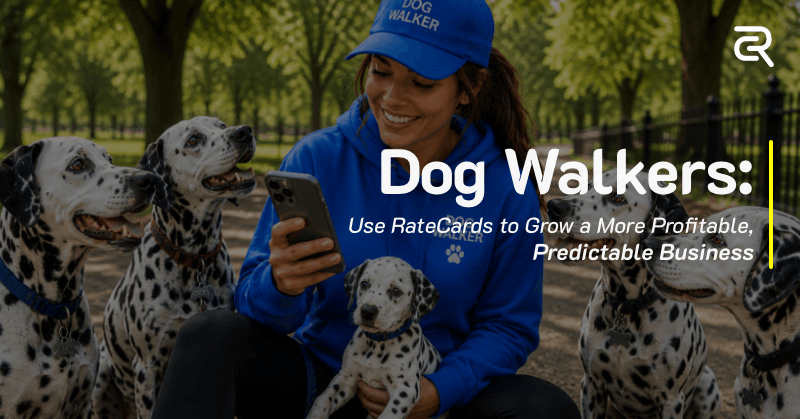
There's a contemporary version of independence that doesn't involve early morning commutes, offices, meetings, or climbing a corporate ladder. For many, it looks like a leash in hand, a full schedule of happy clients, steady notifications, and the freedom to work on your own terms.
For freelance dog walkers across the U.S., that version of success is not only possible—it's increasingly in demand.
Most U.S. households now own a pet (see the American Pet Products Association's annual National Pet Owners Survey), and busy schedules mean more people rely on trusted walkers to care for their dogs. Whether it's daily walks, last-minute bookings, or extended care, clients want someone reliable—and they want it fast.
But just like in other service-based industries, demand alone doesn't guarantee steady income or growth.
To turn dog walking into a stable, scalable business, you need more than reliability and a love for animals. You need structure, consistency, and systems that ensure you're being paid what your time is worth.
That's where RateCards—and modern service tools—make a real difference.
The Dog Walking Reality: Busy Schedules, Unclear Pricing
Most dog walkers don't struggle to find clients. Requests come in through texts, apps, referrals, and social media.
The real challenge isn't getting work—it's pricing it effectively.
Many independent dog walkers still charge in ways that are:
- Based on memory or past conversations
- Different from one client to another
- Influenced by negotiation or convenience
- Not fully aligned with time, effort, or travel
Over time, this inconsistency leads to lost income—even if your schedule is packed.
Being busy doesn't always mean being profitable.
Turning Dog Walking Into a Real Business
Dog walking is already valuable. You're providing trust, safety, exercise, and peace of mind.
But building a business requires removing guesswork.
The shift happens when you move from:
"I charge what feels fair in the moment"
to
"I operate with clear, structured pricing that reflects my value."
RateCards help make that shift real—and sustainable.
How RateCards Strengthen Your Dog Walking Business
A Clear Service Menu Builds Trust
Instead of quoting every job individually, you create a defined list of services:
- 30-minute walk
- 60-minute walk
- Group walk
- Puppy care
- Weekend or holiday rates
Clients know exactly what they're getting—and what it costs—before booking. That clarity positions you as a professional.
You Stop Undervaluing Your Time
Structured pricing helps you avoid undercharging, especially for things like:
- Travel time
- Multi-dog households
- Last-minute requests
It also opens the door for optional tips from satisfied clients—something many are happy to give after great service.
Faster Booking, Less Back-and-Forth
Coordinating schedules manually takes time.
With automated booking, clients can:
- See your availability
- Request a walk time
- Set up recurring weekly walks
This keeps your calendar full without constant messaging.
Organized Communication in One Place
Instead of juggling texts, calls, and DMs, direct messaging tools keep everything streamlined.
You can:
- Confirm details
- Share updates
- Maintain a professional experience
Charge More for Peak Times
Demand isn't the same every day.
With a separate rate card for each, you can set higher rates for:
- Early mornings
- Evenings
- Weekends
- Holidays
- Last-minute bookings
When demand increases, your pricing reflects it.
Get Paid Up Front
Chasing payments slows down your business.
With integrated payments, the client's card is charged the moment you accept a booking, and the money is held securely until the walk is done—then it releases to your wallet and pays out to your bank automatically. That means:
- Better cash flow
- Less admin work
- Fewer awkward follow-ups
One Link for Your Entire Business
Marketing doesn't need to be complicated.
With a single link or QR code, clients can:
- View your services
- Book a walk
- Make payments
You can share it anywhere—social media, flyers, business cards, or even on your leash or gear.
Real-Time Notifications Keep You Responsive
When someone needs a walker, timing matters.
Real-time alerts ensure you never miss:
- New bookings
- Messages
- Payments
The faster you respond, the more clients you secure.
More Control Over Your Schedule
Instead of reacting instantly to every request, you can review and accept bookings on your own time.
That flexibility helps prevent burnout and keeps your workload manageable.
Scale Without Losing Simplicity
With structure in place, growth becomes easier.
You can:
- Take on more clients
- Add additional walkers (team seats come with the Business plan)
- Expand your service area
- Keep pricing consistent
This is how a solo dog walker becomes a full-fledged business.
How Much Should a Dog Walker Charge?
Set prices by service, not by client. Start from what your time costs: the walk itself, drive time between clients, and the admin you do at night. Then price each service so it covers that and leaves a margin:
- 30-minute solo walk: your base price
- 60-minute walk: less than double the 30-minute price, since the travel time is the same
- Additional dog, same household: a flat add-on per walk
- Holidays, early mornings and last-minute requests: a separate rate card at a higher price
Rates vary a lot by city. RateCards' AI Rate Advisor benchmarks your prices against U.S. Bureau of Labor Statistics wage data for your trade and region, so you can see whether you're under market.
Do Dog Walkers Need Insurance?
Yes, if you're walking other people's dogs for money. Pet-care liability insurance covers you if a dog in your care is injured, injures someone or damages property. Bonding covers theft claims, which matters because you'll hold clients' keys and door codes. Many clients ask for proof before they hand over a key, so mention your coverage in your RateCards profile bio. Also check whether your city requires a business licence, and whether local parks limit how many dogs one walker can handle at once.
Redefining Success as a Dog Walker
There's something powerful about building a business around trust, care, and consistency.
Dog walking may seem simple—but it plays a critical role in people's daily lives.
Today, success looks like:
- A predictable, fully booked schedule
- Clear and consistent pricing
- Loyal, repeat clients
- Fast, reliable payments
- The ability to grow without chaos
That's what happens when passion meets structure.
Build a Business That Reflects Your Value
Dog walking is more than just time spent outdoors—it's a service built on responsibility and trust.
When you combine RateCards with tools that simplify booking, communication, and payments, you create a business that works for you—not the other way around.
Instead of guessing, you operate with clarity. Instead of staying busy, you build stability.
Final Thoughts
The dog walking industry isn't just growing—it's becoming more professional and competitive.
The opportunity is already there. But long-term success comes to those who treat their work like a business, not just a side hustle.
RateCards—paired with modern tools—help bridge that gap.
Because success today isn't just about working more hours.
It's about making sure every walk, every booking, and every client interaction is structured, efficient, and priced the way it should be.
Where to go next
Frequently asked questions
How much should a dog walker charge?
Rates are usually set per walk and vary by duration, number of dogs, and local market. The more important decision is structure: publishing fixed prices for defined services — a 30-minute solo walk, a 60-minute walk, a weekly package — rather than quoting each request individually, which is where most walkers under-charge.
How do dog walkers get predictable income?
By moving clients from ad-hoc requests to standing weekly bookings billed on a recurring schedule. A client booking three walks a week on repeat is worth far more than the same client texting when they remember, and it makes next month's income knowable rather than a guess.
Should dog walkers take payment up front?
Yes. Taking payment when a walk is booked filters out bookings that evaporate and protects the time you've held open. On RateCards, the client's card is charged when you accept the booking and the money is held until the walk is done, then released to you. For established weekly clients, recurring billing does the same job automatically.
What is the easiest way for dog walkers to take payment?
A shareable link that lists your services with prices and takes card payment at the time of booking. It removes chasing, removes cash handling, and means the walk is paid for before it happens rather than after.